Global Health Fellowship
The UCSF Department of Emergency Medicine offers one- and two-year fellowships in Global Health for emergency medicine residency-trained physicians.
Our program is designed for mature candidates with prior global health experience who seek to expand their expertise in health policy and contribute to the development of emergency care systems. Fellows who do not already hold an advanced degree in global or public health have the opportunity to pursue a Master of Science in Global Health while expanding their experience across several key areas of global emergency medicine.
We offer fellows the opportunity to develop advocacy and policy experience through a consultancy at the World Health Organization (WHO) headquarters in Geneva, as well as the UCSF WHO Collaborating Centre for Emergency, Critical, and Operative Care. If desired, additional field-level health systems development opportunities are available through the Muhimbili National Hospital’s Emergency Medicine Department in Tanzania (the only emergency medicine department in the country staffed by emergency medicine specialists and residents), Commonwealth Healthcore Corporation in Saipan, and Mulago Hospital and Makerere University in Uganda.
Fellows will also build experience in the health policy, advocacy, and systems development at the regional level through the African Federation for Emergency Medicine (AFEM) and the International Federation for Emergency Medicine (IFEM). Ample opportunities to participate in meaningful research are available through UCSF programs, AFEM’s Scientific Committee, and the broader network of partners engaged with the UCSF WHO Collaborating Centre.
Please visit the Society for Academic Emergency Medicine's UCSF Global Health Fellowship page for more information.
Recruitment mission statement
The UCSF Global Health Fellowship envisions a world where everyone has access to emergency medical care when and where they need it. We promote health equity by strengthening emergency medical systems and access to care for all patients through education, research, advocacy, and the provision of clinical care.
Our program is designed to train emergency physicians in global health by providing training and experience in the foundations of emergency systems development and capacity building, emergency medicine education, travel and field medicine, and program management. Fellows receive training in global emergency medicine concepts and ethical practices from UCSF's top experts in global health. They also gain field experience and develop the research skills necessary to become academic clinicians with a focus on global emergency medicine.
Why Choose UCSF for global health training
- Comprehensive training with top UCSF experts in the field: Receive structured education and personalized mentorship from leaders across the UCSF Department of Emergency Medicine, School of Medicine, and Institute for Global Health Sciences, representing some of the most diverse and accomplished voices in global health.
- High-impact global fieldwork & regional leadership opportunities: Gain hands-on experience with our long-standing partners in Tanzania (Muhimbili National Hospital), Uganda (Mulago Hospital/Makerere University), and Saipan (Commonwealth Healthcore) while building regional leadership experience through engagement with the African Federation for Emergency Medicine and the International Federation for Emergency Medicine.
- Significant overseas experience: Two-year fellows may spend up to six months abroad focusing on fieldwork, systems development, educational programs, and implementation projects. One-year fellows with advanced degrees may spend up to four months abroad.
- Direct access to the WHO: Build advocacy and policy expertise through work and consultancy at the World Health Organization (WHO) headquarters in Geneva and ongoing project work with the UCSF WHO Collaborating Centre for Emergency, Critical, and Operative Care.
- High-impact research with global reach: Conduct meaningful research across UCSF, African Federation for Emergency Medicine, and WHO partner networks, with protected time to lead a scholarly project and generate a publication-ready work.
- Clinical training at San Francisco’s major urban safety-net hospital, EMS hub, and only Level 1 trauma center: Fellows will work clinically at Zuckerberg San Francisco General Hospital’s (ZSFG’s) high-volume, high-acuity emergency department, caring for a diverse patient population. As the base hospital for San Francisco Emergency Medical Services (EMS), ZSFG offers fellows opportunities to interface with the city’s prehospital and disaster systems.
- Master of Science in Global Health (degree funded): Fellows without an advanced degree are eligible to enroll in the UCSF Master of Science in Global Health program, fully funded by the UCSF Department of Emergency Medicine. Fellows who already hold an advanced degree may pursue the Global Health Pathways program, additional certifications such as the Humanitarian in Large Populations Course or the Humanitarian Response Intensive Course, extended fieldwork, or a one-year fellowship option.
- Bay Area lifestyle: Live and train in San Francisco, one of the most dynamic and culturally rich cities in the United States, with access to world-class food, outdoor activities, and a vibrant medical and academic community.
Curriculum
The fellowship begins on July 1 and spans two years. Fellows who do not already hold an advanced degree in public health will enroll in the UCSF Institute for Global Health Science’s Master of Science in Global Health program. Fellows with an advanced degree in global or public health will participate in the Institute's Global Health Pathways program and have the option to spend additional time abroad, pursue short certification courses, or shorten the fellowship to one year.
During the first year, fellows divide their time between their coursework and clinical shifts in the emergency department, with opportunities to travel for projects during breaks in coursework. Most travel takes place during the second year, when fellows complete the majority of their fieldwork and balance their time between travel, projects, and clinical shifts.
While in the U.S., fellows participate in a robust global health curriculum designed to provide a comprehensive overview of global health and global emergency care. Fieldwork focuses on emergency care systems development, advocacy and policy work, capacity-building, and education in low-resource settings.
Fellows are expected to lead a scholarly project and produce at least one scholarly work. They will also participate in activities with the UCSF WHO Collaborating Centre for Emergency, Critical, and Operative Care, write grants, and mentor resident projects.
Experience
International
Fellows participating in the Master’s degree program will have the opportunity to spend six months abroad during the two-year fellowship, while fellows who already hold an advanced degree in global or public health can spend up to four months abroad during the one-year fellowship.
Our fellowship is targeted at mature fellows with some experience in global health who are seeking to deepen their expertise in emergency care systems development, policy development, and capacity building. Fellows have the opportunity to spend a substantial amount of time working with the World Health Organization (WHO) to develop tools that strengthen emergency care systems worldwide.
The UC San Francisco Department of Emergency Medicine has supported the development of emergency care training in Tanzania and Uganda for several years, through longstanding partnerships with Muhimbili University for Health and Allied Sciences and Makerere University, respectively. Fellows have the opportunity to work at one or both of these sites, supporting local capacity building and helping to implement WHO tools.
Fellows will also attend the African Federation for Emergency Medicine Conference during the years when the conference is held, and the International Federation for Emergency Medicine Conference when it is not. Conference registration and travel will be covered by our department.
Clinical
While in San Francisco, the fellow receives a clinical instructor of Emergency Medicine appointment at UC San Francisco and works clinically at Zuckerberg San Francisco General (ZSFG) Hospital, the city's only Level 1 trauma center. With an emergency department (ED) capacity of 58 beds anf six trauma bays, ZSFG provides care for a catchment area of approximately 1.5 million inhabitants of San Francisco and the North Bay Area, serving as the “safety net” hospital for San Francisco’s most vulnerable patients. The ED sees more than 75,000 patients per year, including over 4,500 trauma patients. ZSFG is the only hospital in the Bay Area that offers 24-hour psychiatric emergency services.
San Francisco has a robust public health system, including a city-wide insurance plan (Healthy San Francisco) designed to advance universal coverage. As a sanctuary city with an extensive network of social services, San Francisco helps ensure that all patients receive high-quality care regardless of socioeconomic status, immigration status, race, or sexual orientation.
During clinical shifts, the fellow will supervise and teach residents and medical students and is encouraged to attend residency conference and departmental events. ZSFG also serves as the base hospital for the San Francisco Emergency Medical Services (EMS), giving interested fellows the opportunity to interface with the city's EMS and disaster systems. The fellow will work 768 hours per year (approximately eight shifts per month that can be adjusted for travel).
Comprehensive benefits
Fellows receive a competitive salary benchmarked at the PGY-5 level, which includes an approximately $12,000 annual housing stipend. Reduced-rate campus housing is also available.
Additionally, fellows have access to $12,500 in continuing medical education funds over a two-year period to support project-related expenses, along with four weeks of vacation (included in the hours calculation), and full benefits. These benefits include a retirement program; medical, dental, and vision insurance; life insurance; accidental death and dismemberment coverage; and disability insurance. For more information, please visit the UCSF Office of Graduate Medical Education's website.
The UCSF Department of Emergency Medicine also covers tuition for the Master of Science in Global Health degree, one conference per year (African Federation for Emergency Medicine Conference/International Federation for Emergency Medicine), and the required courses (outlined in Curriculum below).
Kayla Enriquez, MD, MPH – Fellowship Program Director
Image
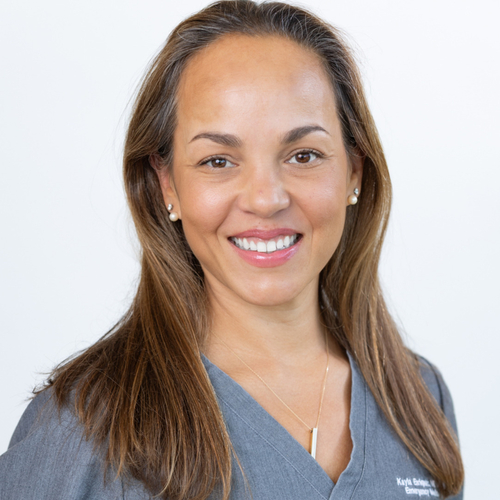
| Dr. Kayla Enriquez is an associate clinical professor of Emergency Medicine at the University of California, San Francisco, where she serves as the Airway Director and Quality Improvement Director for the Zuckerberg San Francisco General Hospital Emergency Department. She completed a residency in emergency medicine at Alameda Health System-Highland Hospital, followed by a fellowship in international emergency medicine at Brigham and Women’s Hospital, and subsequently earned her Master of Public Health in global health and population from the Harvard T.H. Chan School of Public Health.
|
Program leadership & faculty
Fellows receive tailored guidance from faculty within the UC San Francisco Department of Emergency Medicine, including those involved with the Global Health Section and the UCSF WHO Collaborating Centre for Emergency, Critical, and Operative Care, among others, such as:
- Anneka Hooft, MD, co-director, Global Health Section, UC San Francisco Department of Emergency Medicine
- Carol Chen, MD, MPH co-director and department lead, UCSF WHO Collaborating Centre for Emergency, Critical, and Operative Care
Current fellows & alumni
How to apply
Eligibility
- Graduate of an ACGME-approved Emergency Medicine residency program
- Board-eligible or board-certified in Emergency Medicine by the July 1 start date
- Fellows who are not already board-certified are required to sit for the American Board of Emergency Medicine and oral boards in the first year of the fellowship.
- Must possess a California Medical License and a valid DEA license in order to begin the training program
- U.S. citizen
Please note that we cannot sponsor J-1 or H-1B visas for this non-ACGME fellowship.
*UCSF does not use race, gender, sex, or other protected categories or proxies for protected categories in the selection process.
Application materials
All applications to our program must be submitted through the Society for Academic Emergency Medicine's application portal. Applicants must also register for the NRMP Match. Applications should include:
- A cover letter outlining your interest in the Global Health Fellowship and relevant experience
- Curriculum vitae
- Three letters of recommendation
- A copy of your USMLE scores
- Please mail scores to: Dr. Kayla Enriquez c/o Dawnee Wong | Zuckerberg San Francisco General Hospital | UCSF Department of Emergency Medicine | 1001 Potrero Ave. Building 5, Room 6A | San Francisco, CA 94110
Applicants will be notified when applications are complete and additional materials are required. If you have not received a notification but believe your packet to be complete, please email our Fellowship Program Director, [email protected][email protected] , to confirm.
Contact
For questions about the program or application process, please reach out to our Fellowship Program Director, [email protected][email protected] , or our Education Programs Senior Analyst [email protected][email protected] .