SWIFT ED Cuts Patient Wait Times with Innovative Workflows
For some time, emergency departments (EDs) across the country have struggled to adapt to a new reality: shrinking resources must keep up with mounting demand. Rising costs, nursing shortages, growing numbers of people experiencing mental health or substance use disorders, and an aging population have placed increasing strain on emergency care systems. One of the most visible consequences is longer waits for patients seeking care in the ED – a frustration for patients and clinicians alike.

Physician and nursing leaders in the ED at UCSF Helen Diller Medical Center at Parnassus Heights recognized that their department faced the same pressures seen across EDs nationwide. In October 2025, they launched an innovation called SWIFT ED, which reconfigures how clinicians use the ED’s physical space and introduces new workflows, especially for nurses. Inspired by clinical care models the leadership team observed in the EDs at other academic medical centers, the innovation has led to significant reductions in left without being seen (LWBS) rates (the percentage of patients who leave the ED before a doctor or other provider sees them); time to physicians, advanced practice providers, and registered nurses (RNs); and ED length of stay for discharged patients.
“These types of innovations are the latest frontier in creating a flexible ED that recognizes the new reality in emergency medicine,” says Jahan Fahimi, MD, MPH, executive medical director of UCSF Medical Center’s ED (pictured, right). “In one way, shape, or form, I think every one of us will have to abandon or significantly modify our old models.”
A Collaborative Effort
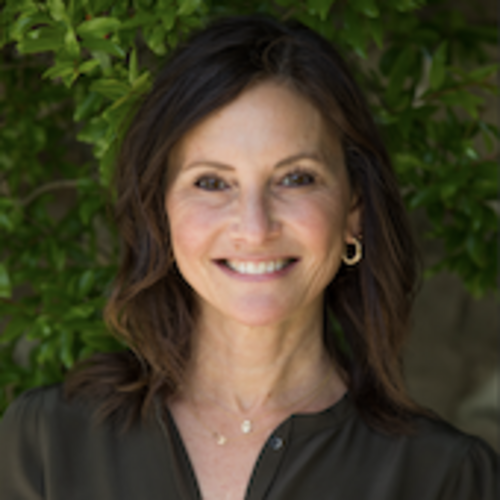
According to Maria Raven, MD, MPH, MS, vice chair and chief of emergency medicine at Parnassus (pictured, left), a worsening nursing shortage combined with California’s requirement that ED nurses be responsible for no more than four patients at a time exacerbates an already challenging situation.
That’s when Fahimi and Nida Degesys, MD (pictured below, right), medical director of UCSF Medical Center’s adult ED, joined nursing leaders Kitty Rogers, RN, associate chief nursing officer for adult services; Karen Martinez, RN, the ED’s unit director; and Rahwa Teklehaimanot, RN, to develop and launch the SWIFT ED.
“This was a complete redesign out of necessity,” says Degesys. “We knew we had to find a way to safely speed up the process without having any additional resources to draw on.”
After meeting with EDs throughout California, the team arrived at its solution. They refashioned their former clinical decision unit into a rapid treatment area and reclaimed two additional exam rooms for the SWIFT ED.
Most significantly, they created new workflows and a new nursing model after consulting with the hospital’s chief nursing officer and hospital regulatory experts. Once they’d designed the concept, they implemented an intensive training and coaching program for faculty, residents, and nurses alike.
The Process
Now, when a patient comes through triage, they are evaluated by a provider and, when applicable, go to the rapid treatment area. There, an ED nurse temporarily assigns themself to the patient. The nurse must then quickly ensure the patient receives any ordered medications and safely administer them.

Once that is complete, if the patient is not discharged, they return to the waiting room to either be assigned a room in the ED or be admitted to the hospital. The nurse then “unassigns” themself from that patient, so the nurse is free to move on to the next patient while still maintaining proper nurse-patient ratios.
The new standard workflows also include a messaging protocol: If a patient is waiting too long in the rapid treatment area, nurses send a text to all providers to signal an immediate response is needed.
“That’s the biggest change, how nursing cares for patients,” says Degesys. “It’s not an ideal scenario, but this is an important adaptation to a challenging situation.”
Some nurses have welcomed the change, noting that the fast pace of the rapid treatment area and the opportunity to care for more patients is what drew them to emergency nursing in the first place.
While the nursing change has had the biggest effect, Degesys says another reason this has sped up ED flow is that physicians no longer search for patients in a chaotic waiting room. They not only know which patients are ready for evaluation but can also see them in a physical space more conducive to evaluation and treatment.
“That’s reduced our frustration a lot,” she says.
Measurable Results
In the first few months of implementation, the SWIFT ED nearly halved LWBS to just above two percent, with reductions of 20 to 25 minutes in time to physicians, advanced practice providers, and RNs.
“This is not just about the numbers,” says Degesys. “Each patient gets a real assessment from a provider, which is a huge win for patient experience and safety.”
Raven adds that while the department has received approval to hire more nurses, the process will take time, and adaptive innovations like the SWIFT ED will likely be part of emergency care for the foreseeable future.
Fahimi agrees.
“Systems that adapt and get creative about matching resources to demand are the ones that will be successful,” he says.
Other News

Recognized with a statewide innovation award, the initiative reduced left without being seen rates to below the national benchmark while improving patient experience and expanding access to care.
Read more about Award-Winning Triage Redesign Improves Emergency Care at Zuckerberg San Francisco General Hospital and Trauma Center
As a participating site in the Pediatric Emergency Care Applied Research Network, UCSF Benioff Children's Hospital Oakland helped conduct a landmark international trial that found similar outcomes with balanced crystalloid fluids and 0.9% saline in children receiving fluid resuscitation for suspected septic shock.
Read more about PRoMPT BOLUS Trial Results: Balanced Fluids and Normal Saline Have Similar Outcomes in Children with Suspected Septic Shock
The UC San Francisco Department of Emergency Medicine demonstrated its leadership and commitment to advancing emergency care at the 2026 Society for Academic Emergency Medicine (SAEM) Annual Meeting from May 18 – 21.
Read more about UCSF Department of Emergency Medicine Shares Research at 2026 SAEM Annual Meeting